Hours
Women in the Netherlands work part-time more often. Fewer paid hours means a lower annual income, even when hourly pay is equal.
The Netherlands has the widest gap in annual earnings between men and women in the EU. That is the finding of the Gender Equality Index 2026 from the European Institute for Gender Equality (EIGE). Employed women here earn 69% of what men earn per year. Across the EU the average is 80%. As an employer you want to know how much of that shows up on the payslip.
By Jessie Liauw A Fong · Published: · Reading time: 5 minutes
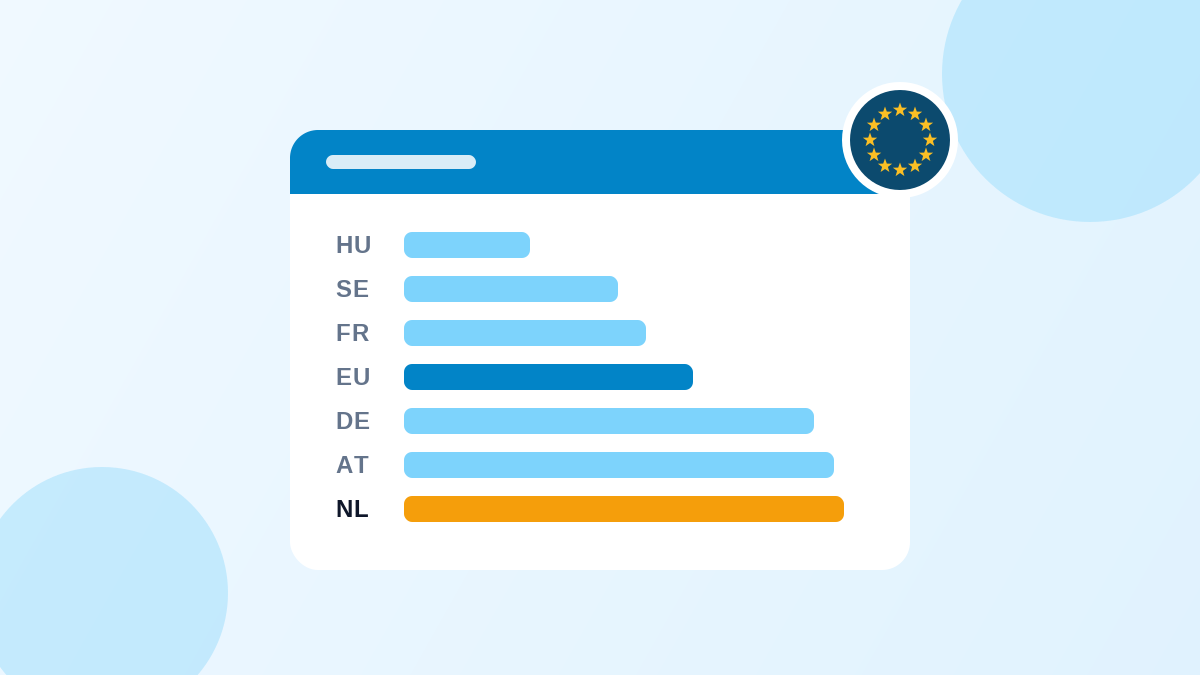
Annual income depends on how many hours you work and what you earn per hour. The gap in annual income adds both differences together. The gap in hourly pay shows only the second.
Annual incomeHours workedHourly pay
Annual income (median, 2025)
Hourly pay (mean, 2024)
On annual income the Netherlands ranks last in the EU, just below Austria (70%) and Germany (71%). On hourly pay it sits at the European average. What sets the Netherlands apart is therefore mostly the number of paid hours. EIGE finds low earnings ratios precisely in countries where part-time work is common.
The hourly pay gap of 11.2% is unadjusted. It compares all men and women, regardless of job, sector or experience. It says nothing about equal pay for equal work. You only see that in the figures of your own organisation.
Women in the Netherlands work part-time more often. Fewer paid hours means a lower annual income, even when hourly pay is equal.
Women are strongly represented in lower-paying sectors such as care, hospitality and cleaning. Of employed women, 43.6% fall in the low-paid group, compared with 27.6% of men. EIGE counts anyone earning two thirds or less of the median employee income.
Women hold 30% of management positions in the Netherlands. The EU average is 36%. Those who move up less often to better-paid roles also fall behind in hourly pay.
The two parts of the sum call for two different analyses. Each one raises its own question for your pay policy.
Start with the question the pay transparency law asks. Do people doing equal work or work of equal value earn the same? Comparing on hourly pay takes contract hours out of the equation. The pay gap report asks for the pay gap per category of workers (Directive 2023/970, Article 9(1)(g)).
How do you set the starting salary for the same job?
Room to negotiate without fixed criteria is a well-known source of differences at hiring. Basing a starting salary on previous pay carries an existing difference forward. The Directive therefore bars employers from asking applicants about their pay history (Article 5(2)).
Equal hourly pay per job does not rule out a difference in annual income. So look at the distribution as well. Who works part-time, in which jobs and at what level? Who moves into better-paid roles? The report makes part of this visible through the distribution of men and women across the four pay quartiles (Article 9(1)(f)).
Can employees who work four days also move into a management role?
Criteria for pay progression must be objective and gender-neutral. A requirement such as full-time availability affects women more often in practice. You need to be able to justify such a requirement from the job itself. Under Dutch law, a distinction based on working hours is only allowed when it is objectively justified (Article 7:648 of the Dutch Civil Code).
A payslip shows an hourly rate and a number of hours. Equal pay is about the first. The European ranking is mostly about the second. If you only check hourly pay per job, you do not see how hours and progression are distributed. If you only look at annual income, you do not see whether equal work is paid equally. You need both analyses.
The income gap compares what men and women earn per year. Hours worked count towards it. The pay gap compares pay per hour. In the Netherlands the income gap is the widest in the EU, while the hourly pay gap is around the EU average.
Not automatically. A difference in annual income also comes from part-time work and from how men and women are spread across sectors and jobs. Whether equal work or work of equal value is paid equally only shows in an hourly pay comparison within your own organisation.
Indirectly. The pay gap report includes the distribution of men and women across the pay quartiles. Criteria for pay progression must also be objective and gender-neutral. A distinction based on working hours is only allowed with an objective justification.

Employer organisations are sounding the alarm at BNR: Dutch SMEs are going to miss the pay transparency deadline. The bottleneck isn't the law — it's the absence of tooling.

Female judges discriminated and companies failing to report: two news stories showing why pay transparency is urgent.
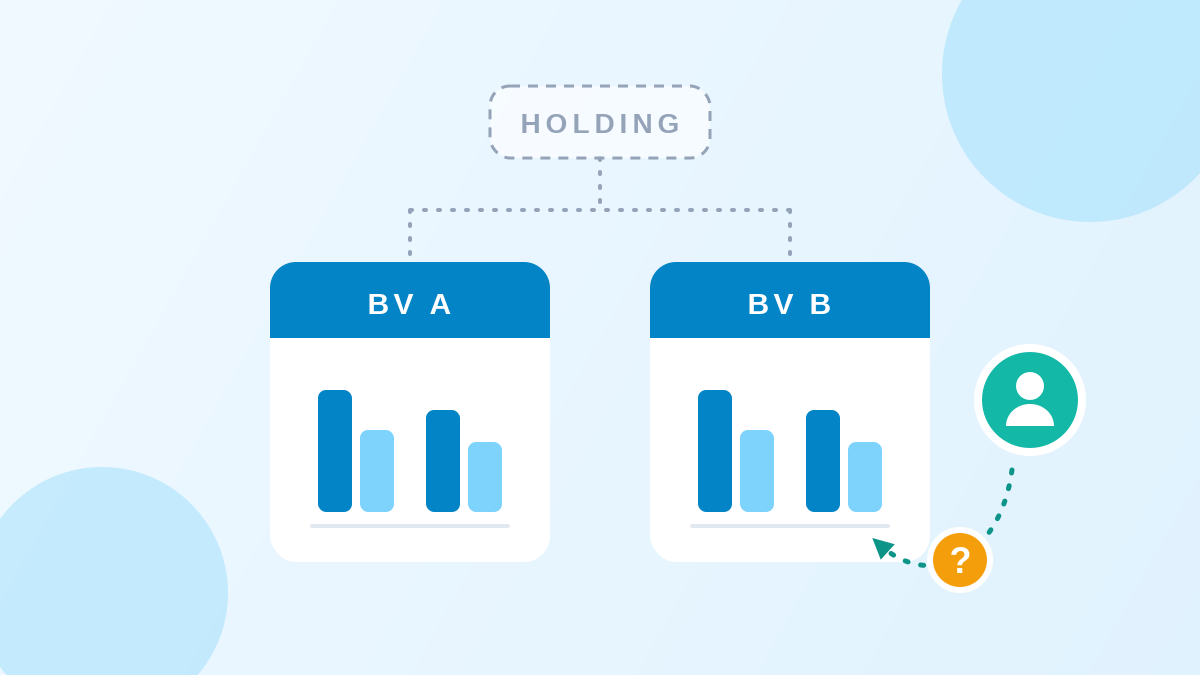
The legal employer is the starting point. When each BV reports separately, when group-level reporting is possible and why agency workers count at the hirer.
Payqual compares gross hourly pay per group of work of equal value and flags deviations per employee and per cluster.