Unexplained
You have not found the explanation yet. The gap calls for a closer look at the data, the classification and the pay criteria.
Investigate
Your pay analysis shows a gap you cannot immediately explain. It is tempting to describe it neatly in a report and move on. That is not enough. A gap you cannot justify with objective, gender-neutral criteria has to be remedied. After that, you make sure it does not come back.
By Jessie Liauw A Fong · Published: · Reading time: 8 minutes

Two words that are often used interchangeably, while they mean different things. Which one applies determines what you need to do next.
You have not found the explanation yet. The gap calls for a closer look at the data, the classification and the pay criteria.
Investigate
There is no valid justification for the gap. The gap is then a disadvantage you have to remove.
Remedy
A statistical outcome is the start of the investigation. It is not automatic proof of discrimination. Nor is it a conclusion that lets you close the file.
Signal
Deviation in the pay analysis
Check
Data and classification are correct
Investigation
Is there an objective, gender-neutral justification?
Yes, justified
No, unjustified
Is a gap of 5% or more within a category still open six months after the report was submitted? Then a pay assessment becomes mandatory.
Before you adjust salaries, check the data and the employees you are comparing. A striking outcome sometimes turns out to be an input error or a one-off payment.
You may correct a wrong classification. Changing a category so that a gap disappears from the analysis is not a solution.
Look at which concrete circumstances could justify the gap. Relevant work experience, demonstrable performance or an objectively applied allowance can do that. An explanation does have to be more than a label. For more experience, state which experience is relevant to the work and how it is reflected in pay. For better performance, show what the assessment is based on and that the same standard applies to others.
"He negotiated better", "she asked for less" or "we matched the previous salary" are not sound pay criteria in themselves. The Netherlands Institute for Human Rights has stated this explicitly. Pointing to a cause is not the same as justifying the gap.
A gap between the average pay of men and women does not tell you who is underpaid. Nor does it tell you which amount to adjust. For each employee involved, determine:
You do not have to give everyone the same salary. You do have to apply the same sound criteria. A gap that a statistical model explains is not automatically legally justified.
If someone earns less without justification, you remove that disadvantage. You can do that by correcting the grading, raising pay or granting a missed allowance after all. Look at the past as well. Article 16 of the EU directive provides for full compensation in case of an infringement. That includes back pay, related bonuses or payments in kind, interest and possibly other damages.
For a confirmed case, have it assessed since when the disadvantage existed, which amounts are owed and which limitation periods apply. An average gap of 6% does not mean every employee is entitled to 6% extra pay.
Under article 10c(7) Wgbmv of the draft law, you remedy unjustified pay gaps from the report within a reasonable period. The explanatory memorandum makes clear this also applies to gaps below 5%. There is no fixed period. What is reasonable depends on factors such as the number of gaps and their cause. The works council is involved in the remediation.
Draw up a remediation plan straight away with an owner, measures and dates. A grading error is usually fixed faster than a problem in the entire pay system.
If your organisation is subject to the reporting obligation, article 10d(1) of the draft law adds an obligation. A joint pay assessment becomes mandatory when all three conditions are met:
The six months start when the report is submitted, not at the first signal in your analysis. And 5% is not a permitted margin for unequal pay.
Read what a joint pay assessment involvesA useful file shows for each gap what you checked, what you concluded and what you did. The draft law does not prescribe a fixed form. This is a practical minimum.
| Part | What do you record? |
|---|---|
| Signal | Which gap was found, for which employees and over which period? |
| Check | Are the data and job categories correct? |
| Investigation | Which explanations were examined and what evidence supports them? |
| Conclusion | Which part is justified and which part is not? |
| Remediation | Which adjustments and back payments will you make? |
| Planning | Who carries it out and when? |
| Follow-up check | Has the gap actually been remedied? |
After the individual remediation, look at what allowed the gap to arise. Think of negotiating room without clear criteria, different grading rules per manager or unclear bonus conditions. Adjust the rules and how they are applied and check whether similar cases exist. Otherwise you fix one salary while the same problem remains for other employees.
Payqual takes the searching and record-keeping off your hands. The decision on justification and remediation stays with you and your adviser.
Payqual compares on corrected gross hourly pay from the payroll tax return. Deviations per employee and per cluster get a signal with a financial indication of the gap.
Roles are grouped into clusters through a gender-neutral questionnaire. When a signal appears, you reassess the classification or re-import the data.
You justify a gap with a fixed reason and a mandatory explanation. If the calculation changes, the justification goes back for review.
Every signal has a status. A method version and a fingerprint of the source data prevent an outdated audit from counting as complete. After a pay adjustment and a new audit, resolved signals are archived.
Every gap you find should end in one of two outcomes. A substantiated justification you can back with evidence. Or demonstrable remediation, with a check for recurrence. A gap that only appears in a report is neither.
No. Unexplained means you have not found the explanation yet. It is a reason to investigate. Only when there turns out to be no objective, gender-neutral justification is the gap unjustified and do you have to remedy it.
Yes. According to the explanatory memorandum to article 10c(7) of the draft law, the duty to remedy also applies to unjustified gaps below 5%. The 5% threshold only matters for whether a joint pay assessment becomes mandatory.
Not in itself. The Netherlands Institute for Human Rights has found that negotiating better or matching a previous salary is not a sound pay criterion. You must be able to trace the gap back to objective criteria that you apply equally to everyone.
Article 10c(7) and article 10d(1) Wgbmv come from the draft law of 27 May 2026. These obligations still depend on the parliamentary process. The government names 1 July 2027 as the intended effective date. The existing ban on pay discrimination between men and women already applies.
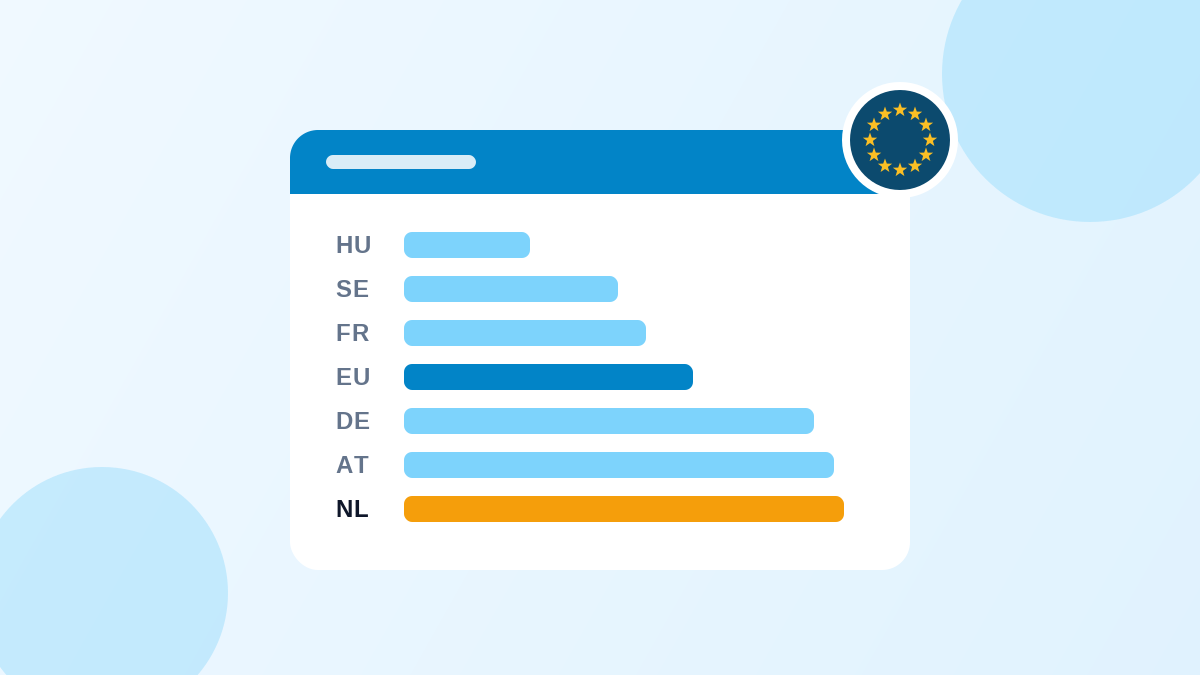
Annual income is hours worked times hourly pay. Why the Netherlands ranks last in the EU and how to make the same distinction in your own figures as an employer.

Employer organisations are sounding the alarm at BNR: Dutch SMEs are going to miss the pay transparency deadline. The bottleneck isn't the law — it's the absence of tooling.

Female judges discriminated and companies failing to report: two news stories showing why pay transparency is urgent.
See how Payqual flags deviations per employee and cluster and records every justification in an auditable file.